
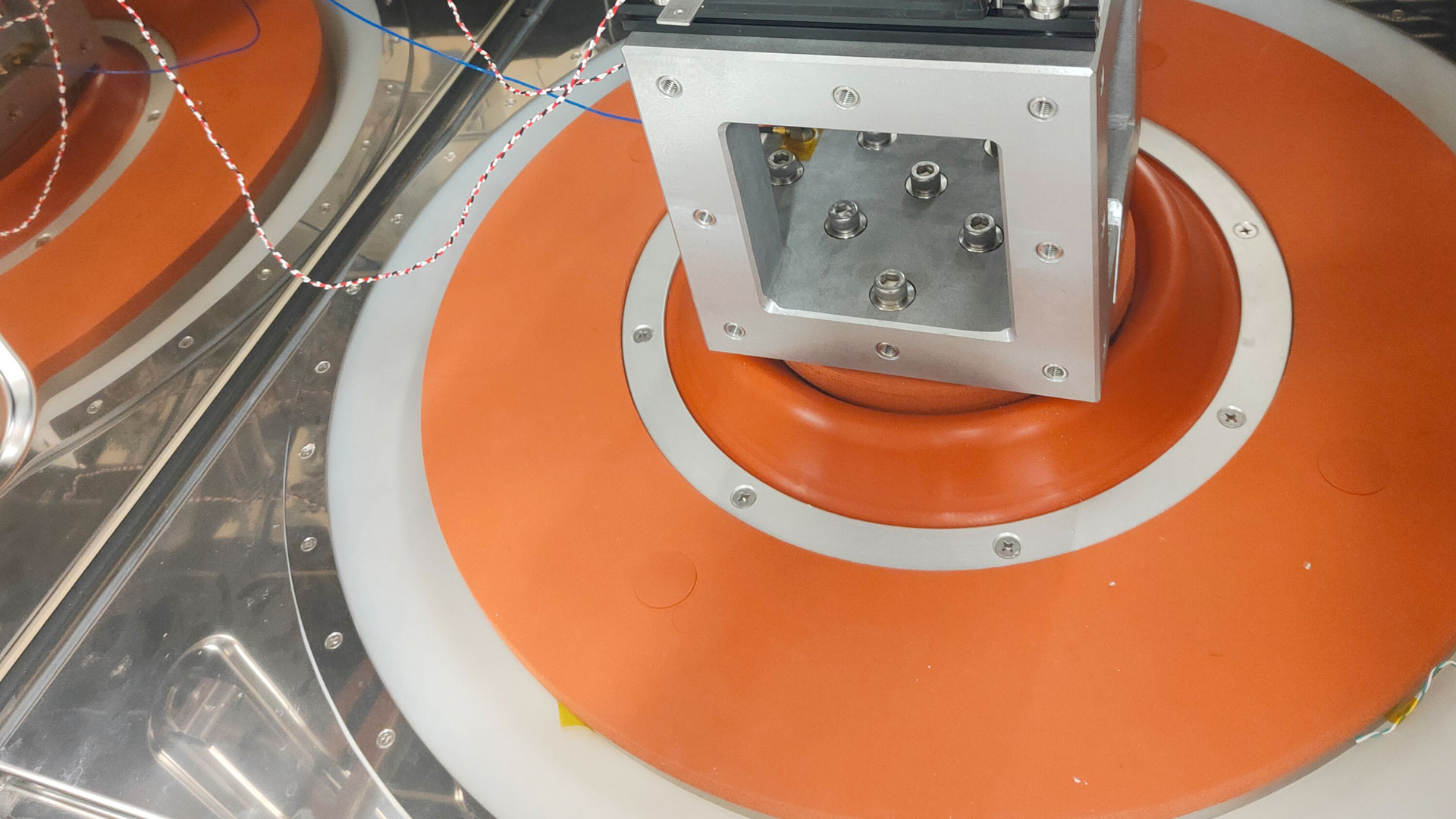
How can you protect electronics when a conventional housing is no longer enough?
Electronic components may be exposed to heat, moisture, aggressive substances, strong vibrations, or repeated sterilization cycles, and a conventional housing alone may not provide sufficient protection against these conditions.
In such cases, development begins not with choosing a particular plastic but rather with identifying the conditions your electronics or drive system must withstand. This forms the basis for defining material requirements, selecting the encapsulation process, and determining which tests are needed to verify resistance to stress.
This is where polymer technology at EPnP comes in. Material selection, simulation, processing, and testing are considered together from the outset. Encapsulation can therefore be designed to meet specific product requirements and provide more than just protection against external influences.
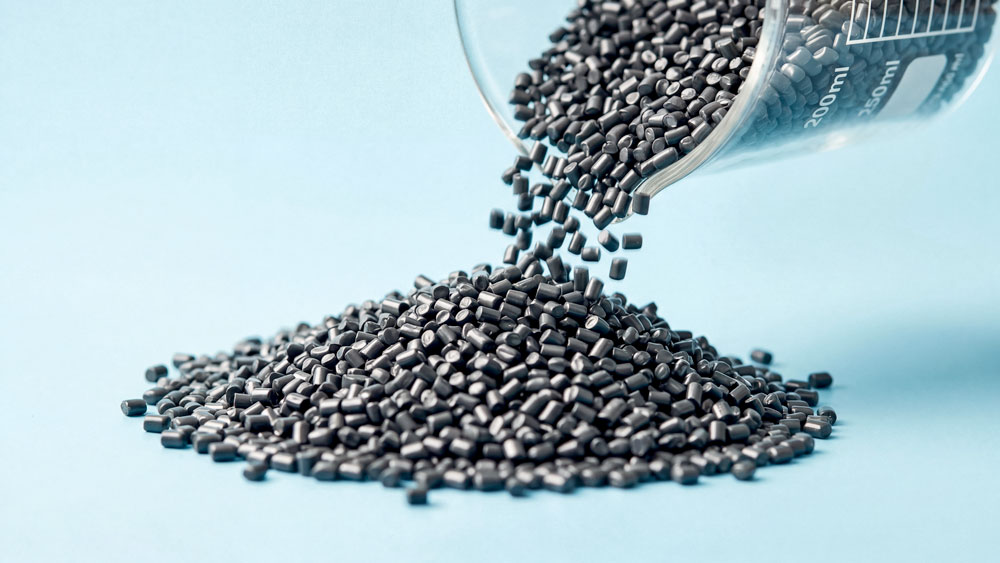
Careful material selection is the foundation for polymer encapsulation that protects electronics under demanding conditions.
Contents
Polymer technology at EPnP
Electronics encapsulation involves more than simply enclosing an assembly in plastic. Material, geometry, thermal behavior, and operating conditions all influence one another and must therefore be carefully coordinated.
EPnP combines materials expertise with development and manufacturing capabilities. We help you select suitable polymers, analyze their behavior under expected operating conditions, and develop the right encapsulation solution for electronic components, sensors, or electric drives.
EPnP uses an extensive material database developed over many years in collaboration with research partners. Digital models and material simulations are also integrated into the development process. This makes it possible to predict how a material will behave under specific loads before manufacturing begins.
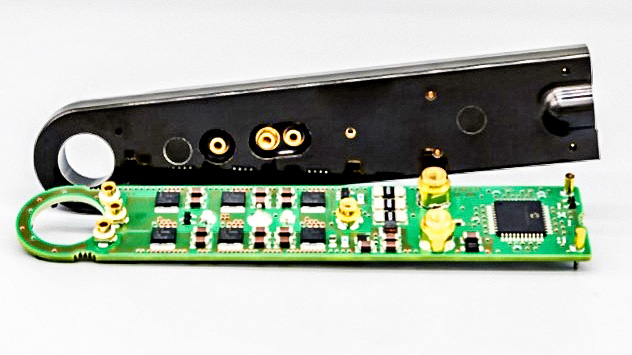
Illustration of encapsulated and non-encapsulated PCB-A designs and their housings.
Thermoset encapsulation with RTM and RIM
For particularly demanding applications, EPnP uses thermoset encapsulation processes such as resin transfer molding (RTM) and reaction injection molding (RIM).
In these processes, a reactive thermosetting compound is introduced into a heated mold. Heat and pressure cause the material to chemically crosslink and form a solid protective shell around the electronics or drive system.
This crosslinking is crucial to the final material properties. Thermosets can withstand high temperatures, absorb very little moisture, and offer high resistance to chemicals and liquids. Depending on the material and design, operating temperatures of up to 200°C are possible.
During encapsulation, sensitive components and solder joints must also be considered. The process is designed to introduce the material at a stage when minimal force is applied to sensitive areas. Only after the material has been introduced does the crosslinking process continue.
EPnP also uses a patented process for potting and overmolding electronics and drive systems to produce robust components for demanding operating conditions.
The right material for your specific application
There is no one-size-fits-all approach to selecting the most suitable polymer.
Does your product need to withstand years of exposure to moisture or chemicals, extreme temperature fluctuations, vibrations, or shock loads? Does it require regular sterilization? And does an integrated antenna need to continue transmitting and receiving signals reliably despite encapsulation?
The choice of material and geometry depends on the answers to these questions.
EPnP draws on a material database containing a range of thermosets and their properties. In addition to mechanical and thermal properties, resistance to liquids and solvents is particularly important.
Even a highly durable plastic may not withstand every substance or duration of exposure. What matters is how well its properties match the application and expected stresses.
Simulating material behavior
Especially for applications involving prolonged exposure to liquids or solvents, a short laboratory test is often insufficient to assess material behavior throughout the service life of a product.
This is where simulation comes in.
EPnP can simulate solvent diffusion into thermosets to analyze how quickly solvents penetrate the material and how their distribution changes over time.
Heat sources within the electronics can also be taken into account. For example, a power component such as a PowerFET heats its immediate surroundings and can cause the material to dry out. Diffusion and thermal effects therefore occur simultaneously.
These models can be used to compare materials, layer thicknesses, and geometries during development and reduce the need for the extensive testing of design changes.
Simulation is not a substitute for physical testing but can be used to narrow the options and focus subsequent tests on areas where additional insights are needed.
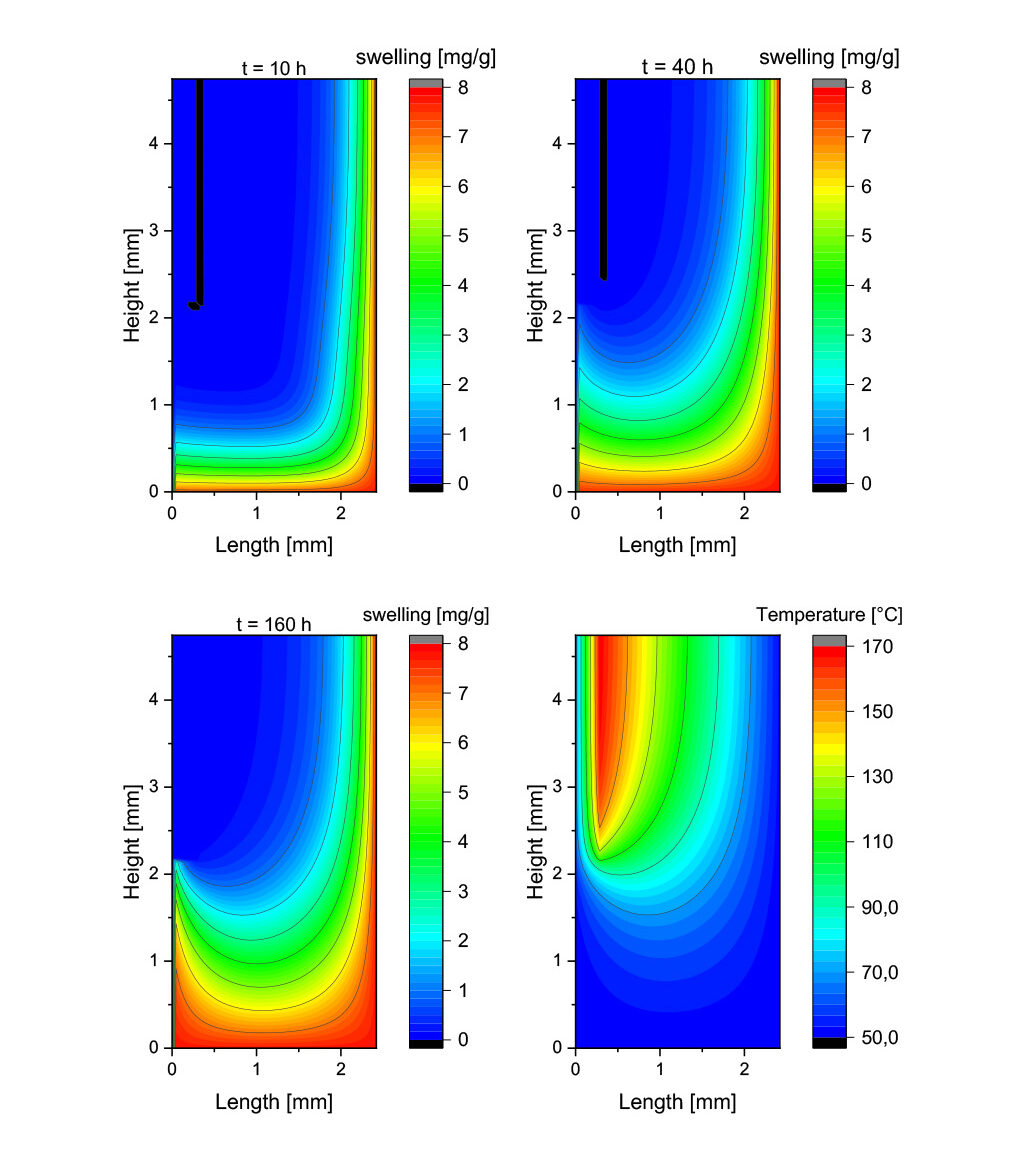
2D simulation of swelling in an electronic component. The heat flux is 7.71 W/m², and the temperature of the pure solvent is 50°C.
Test durability under real conditions
Encapsulation performance can be verified only through testing under actual stress conditions.
Encapsulated systems are therefore tested under conditions that simulate or exceed those expected in actual use. Depending on the application, these may include temperature, vibration, shock, or drop tests.
A fully encapsulated IoT sensor system underwent thermal cycling, drop tests from heights of up to 7 m, and more than 1,000 cycles of shock loading at 40 g, among other tests. No adverse effects on the product were observed.
The functionality of the electronics is also evaluated. For example, vibration tests were used to investigate whether encapsulation affects the measurement accuracy of the sensor.
Simulation, material selection, and physical testing are therefore all essential to assessing whether the material can withstand specific stresses and the entire system can continue to function reliably under these conditions.
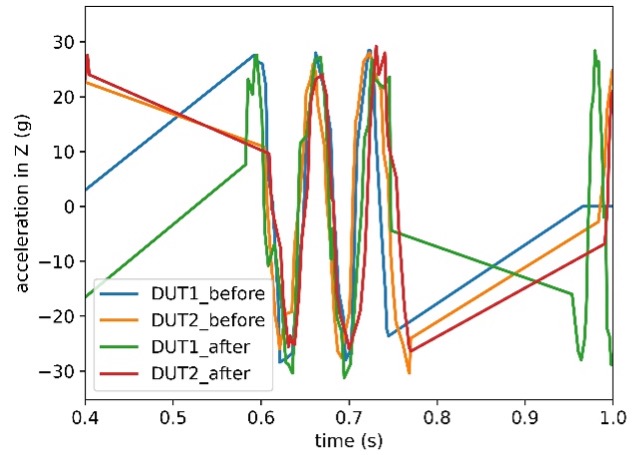
Sinusoidal vibration measurement following stress testing of the test specimens.
Application areas of polymer technology
Requirements vary across industries, but all these applications require reliable electronics under demanding operating conditions.
Medical technology
For example, surgical instruments must withstand repeated sterilization cycles while maintaining their mechanical strength. Depending on the application, sterilization methods may include autoclaving, gamma irradiation, or ethylene oxide (EtO) sterilization.
Suitable encapsulation can protect sensitive electronics and help minimize the need to disassemble instruments for sterilization.
Industrial IoT
Sensors used in mining, agriculture, shipping, or industrial facilities are often continually exposed to moisture, dirt, chemicals, temperature fluctuations, or mechanical stress.
For wireless systems, the effect of the encapsulation material on antenna performance must also be considered.
Material type and layer thickness can therefore also be evaluated in terms of RF performance and optimized for the antenna used. The white paper describes a fully wireless sensor platform designed with this interaction in mind.
Aerospace and mobility
Electronics used in aerospace or mobility applications must withstand extreme temperature fluctuations, vibrations, and shock loads while remaining reliable over long periods of operation.
Highly integrated encapsulation can help create compact electronic assemblies while protecting them against external influences.
From material selection to tested components
At EPnP, polymer technology does not begin at the injection molding machine.
If you are developing electronics, sensors, or drive systems for demanding operating conditions, we start by assessing the specific requirements of your application. Which temperatures will the product be exposed to? Which substances will it come into contact with? Which mechanical stresses are expected? And which functional properties must remain unaffected by encapsulation?
This forms the basis for selecting the material, geometry, and manufacturing process. Different options can be evaluated through simulations early in development. The resulting solution can then be manufactured and tested under defined stress conditions.
Encapsulation can therefore be integrated into product development from the outset rather than added as an afterthought to a finished product.
Would you like to find out which encapsulation solution and material are best suited to your application?
Do you develop electronics or drive systems for demanding operating conditions?
We support you from material selection to a fully tested solution. Contact us to discuss the right polymer solution for your application.
Find out more in our white paper
How do thermosets behave when exposed to solvents? What role do diffusion simulations and thermal effects play? And what do vibration, shock, and drop tests reveal about fully encapsulated systems?
Our white paper examines the technical principles and presents studies on the development and validation of polymer encapsulation solutions for demanding applications.
FAQ
Yes. We help select suitable materials, manufacturing technologies, and testing strategies during the early stages of development. We also consider manufacturability, component availability, and component life cycles. This helps reduce development time, costs, and the need for subsequent revisions.
Yes. We support the integration of sensors and actuators, wireless communication, embedded software and firmware, and mechanical system design. This enables the development of connected systems for medical technology and industrial applications.
We have experience with robust electronic assemblies for demanding operating conditions. This includes stringent testing, documentation, and traceability requirements. We also collaborate on qualification and testing programs involving thermal cycling and vibration testing.
We assess feasibility, manufacturability, and testability early in development and adapt quality assurance and testing strategies to project requirements. We also provide transparent cost and risk estimates and use structured project management and change control processes to identify risks early.
Upload your data directly through our inquiry portal
for faster quotes, automated data verification, transparent communication, and secure data exchange (GDPR-compliant, encrypted, and hosted on servers in Germany).